
























Wooden vs Metal Kid's Beds: Which Is Better?
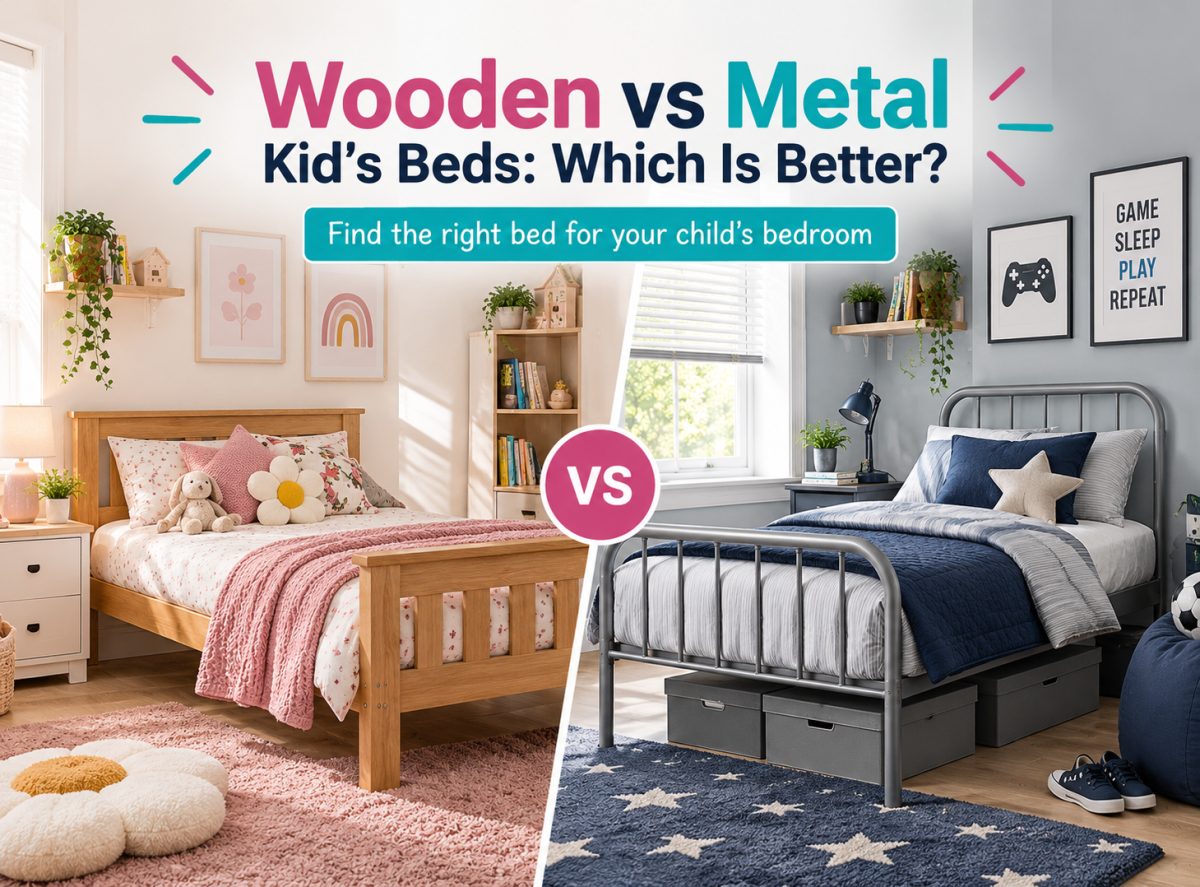
A new bed can change the feel of your child's bedroom dramatically. A solid wooden frame might make the room feel cosy, while a metal bed with narrow rails can leave more of the walls on show. But looks are only part of the decision. You'll also need to think about storage, how much space the frame takes up and whether the bed will still be suitable in a few years. At Children's Bed Shop, we sell both wooden and metal kids' beds to suit different bedrooms.
Start With the Bed, Not the Material
It helps to decide what you need from the bed before worrying too much about what it's made from. Is this your child's first full-sized single? Do two children need to share a room? Or are you replacing a bed that's become too small and hoping to gain some storage at the same time?
Measure the space where the bed will stand, including the radiators. Check the frame's external dimensions rather than relying on the mattress size. Two beds that take a standard single mattress won't necessarily be the same length or width. Make sure you allow room for drawers and changing the bedding.
Wooden Beds Give You More Choice of Design
Wooden beds come in quite different forms. You can choose a simple pine frame, a painted white single or something with drawers and shelves built in. Natural finishes sit comfortably alongside other wooden furniture, while a painted bed makes it easier to change the room's colours as your child grows.
If you're decorating for a younger child, it's worth looking at our kids' house beds. Some have an open, roof shaped frame above the mattress, whereas others have a more enclosed playhouse design. They can make the bed a feature of the room without needing separate themed furniture.
Not every wooden frame is solid timber. Some are made from engineered wood, and construction varies considerably between models. Check the product details for the materials used, particularly if you want solid wood rather than a painted composite frame.
Metal Beds Work Well in Smaller Rooms
A metal bed can be a good choice when you don't want the furniture to dominate the room. Many designs have open headboards and footboards rather than solid panels, so you can still see the wall behind them. In a narrow bedroom, that can make a noticeable difference to how the space looks.
There's also more choice of colour than you might expect. Our children's metal beds include the Vipack Bronxx single bed in different finishes, alongside simpler metal frames and bunk beds. A more understated design may suit a teenager. An open looking frame doesn't always take up less floor space. It's the measurements that tell you whether the bed will fit.
Think About Where Everything Will Go
If toys, clothes and spare bedding are already taking over the bedroom, adding extra storage may help. Wooden beds are often built with drawers, shelving or cupboards underneath or around the mattress. These can replace a separate chest of drawers or provide somewhere for things that would otherwise end up on the floor.
Our kids' beds with storage include several ways of using the area beneath the mattress. Look at how the storage opens as well as how much it holds. A drawer isn't much use if a bedside cabinet stops you pulling it out.
A metal single bed may leave enough space underneath for boxes, but check the height from the floor to the lowest part of the frame. Can your child reach the boxes without help?
Will Wood or Metal Last Longer?
The material alone won't tell you how long a bed will last. A well made wooden frame can remain sturdy for years, as can a metal one. Look at the supports beneath the mattress, the joints and the manufacturer's weight limit. Check these details for older children.
Both finishes can show signs of everyday use. Wood may pick up dents from toys or furniture being moved around. Paint on a metal frame can chip if it's knocked. Neither is particularly difficult to look after. Follow the cleaning advice for the finish, and check the fixings occasionally. A loose joint can make either type of bed creak.
Don't Forget Bunk Bed Safety
For shared rooms, our bunk beds include wooden and metal frames, with some designs that separate into two singles later. That can be useful when children are ready for their own bedrooms.
Whichever design you choose, children under six shouldn't use the top bunk. Check the ladder, guard rails, recommended mattress depth and ceiling clearance before you order. These details are more important than the material.
Which Would Suit Your Child?
If you want built in drawers or a more playful house bed design, start by looking at our wooden beds. If you're furnishing a compact room and prefer an open headboard, take a look at our metal frames. Compare prices for the actual designs you like, rather than assuming one material will always cost less.
At Children's Bed Shop, you can browse our full range of kid's beds and check the measurements, finishes and features of individual models. Once you know what the room needs, choosing between wood and metal will become much easier.